New Aircraft
Summary
12/8/2025. Read time: 5 min.
The current market for in-production, pressurized, turbine-powered aircraft comprises 15 manufacturers and 53 different models. Narrowing it down is simple. Forget range, payload, seats, runway performance, and size. The primary factor is what makes airplanes fly. Money.
For an estimate of purchase price and operating cost, here is a calculator.
Access the performance specs of all aircraft here (CVS file).
Details
Fifty different aircraft may seem like a lot, but you can quickly whittle down the live options by cost. The more types of aircraft you can afford, the more the performance specifications come into play. Things like NBAA range, speed, payload, passenger seats, size, weight, and runway required.
Armed with this, you can answer the big questions: Can I afford it? Where can I go? Who and what can I take with me?
Bigger is not always better. What you gain in payload, range, and convenience can become operationally restricting. Aspen, CO has a 95ft max wingspan, Naples, FL has a 75,000lb weight limitation, for example. Conversely, if you want to unload pallets on a grass strip, the field narrows.
Once you've zeroed in on your options, go sit in it. What the marketing fodder doesn't capture could make the difference. Skipping the first 50 deliveries will save you early manufacturer improvements and a decent measure of model popularity.
Used Aircraft
Only buy popular used aircraft. Aviation is a very niche market, with only a few hundred to a few thousand units produced for the most common models. For any used aircraft, you must consider the availability of parts, maintenance support, and insurability.
The hours, cycles, maintenance history, damage history, logbook history, and age all heavily influence the cost. Knowing the specifics of an aircraft model is very important. For more information on used aircraft in the last 20 years and where they came from, check out this article.
Options
What follows is a broad summary and some hot takes on the in-production options, broken down by aircraft groups:
Turboprops
Very light jets
Light jets
Midsize jets
Super midsize jets
Large cabin jets
Ultra-long-range jets
Bizliners
The lines between categories get blurry.
Along with the available makes and models are estimated purchase prices and annual operating costs—keyword: ESTIMATED. The price is intended to land somewhere between base and well-equipped in 2025. The operating budget contains many assumptions that do not reflect your operation.
You can play with the numbers on this calculator.
Turboprops
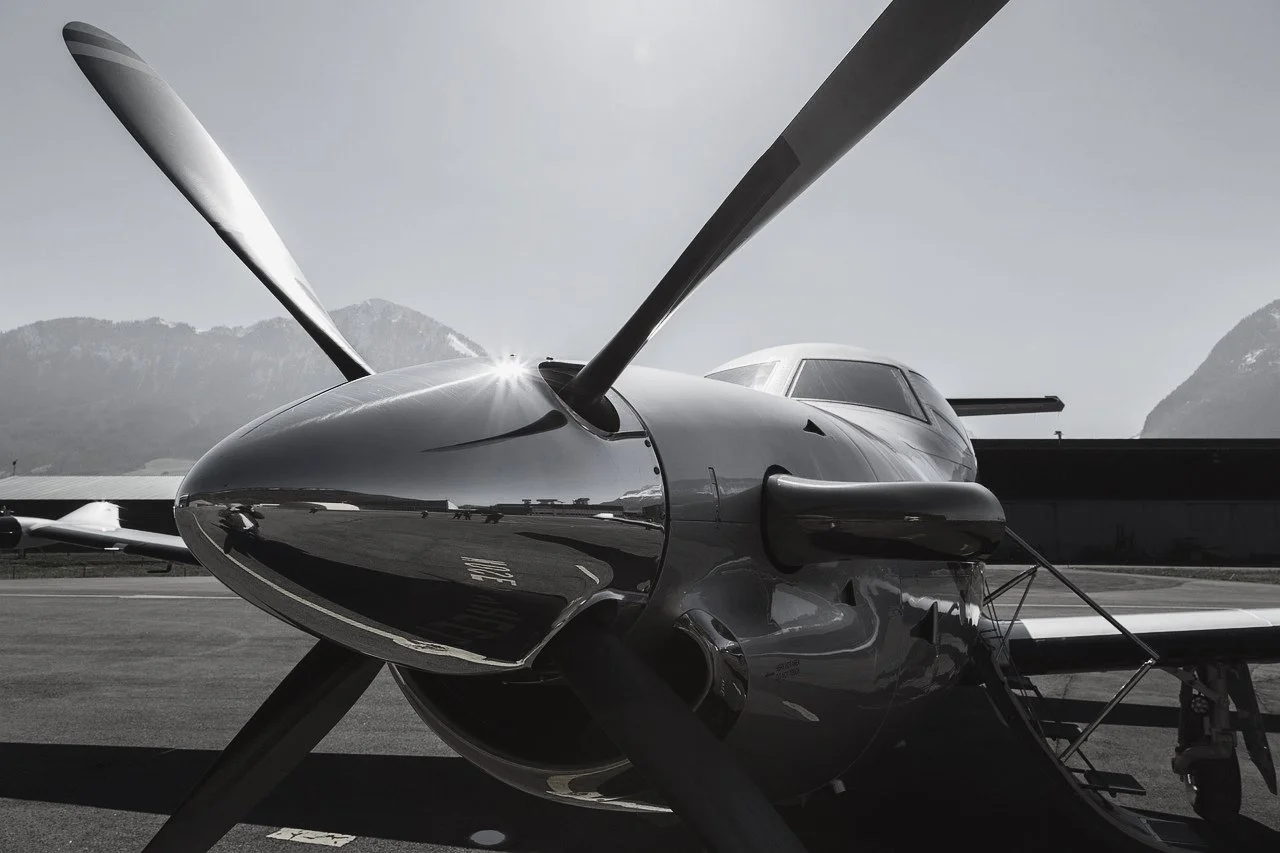
In the turboprop/light jet realm, you get to pick two out of three: speed, range, or payload. Turboprops can load up on fuel and passengers and go slow. Light jets have the speed, but you can generally only pick one more— range or a full cabin, not both.
Since the introduction of the TBM and PC-12 in the 1990s, single-engine turboprops have dominated the light twin piston market, capturing a significant market share from twin turboprops due to their reliability and efficiency. Currently, there are seven* single-engine turboprops available. Only three companies are making twin turboprops, with a total of five options.
Singles:
| Price | Budget | |
| Piper M500 | $2.4M | $516K |
| Piper M700 Fury | $4.3M | $549K |
| Epic E1000 GX | $4.8M | $607K |
| Daher Socata TBM 960 | $5.6M | $606K |
| Daher Socata TBM 980 | $5.8M | $607K |
| Textron Denali (*2026) | $7M | $604K |
| Pilatus PC-12 NGX | $7M | $617K |
All singles are now Garmin-equipped (autoland features). The Pipers are pocket rockets, the TBMs are your sports car, and the Epic, Denali, and Pilatus are SUVs.
Twins:
| Price | Budget | |
| Nextant G90XT | $2.9M | $685K |
| Textron King Air 260 | $7.5M | $715K |
| Textron King Air 360 | $8.2M | $1.3M |
| Textron King Air 360ER | $8.5M | $1.3M |
| Piaggio P180 Avanti Evo | $8M | $1.3M |
The Nextant is a remanufactured King Air 90 (not the same as a refurbished aircraft; these are 0-hour aircraft and engines). King Air 360s and the Piaggio cross the 12,500lb threshold and have additional regulatory requirements, such as required type ratings. At the King Air 360 level, two pilots are assumed.
Very Light Jets
| Price | Budget | |
| Cirrus Vision Jet SF-50 | $3.3M | $573K |
| Eclipse 550 | $3.2M | $572K |
| Embraer Phenom 100EX | $5.2M | $792K |
| Textron Citation M2 Gen3 | $6.2M | $852K |
| HondaJet HA-420 | $6.2M | $769K |
Very light jets are a tough niche. They are all performance-limited due to the complexity and fuel burns of jet engines packaged under 11,000 lbs. Eclipse and Vision Jet are even smaller at 6000 lbs. But they check the jet box at an entry-level price. More seats, more range, more payload would be nice. Back to the primary consideration—cost—you learn to make do with the utility you have.
Light Jets
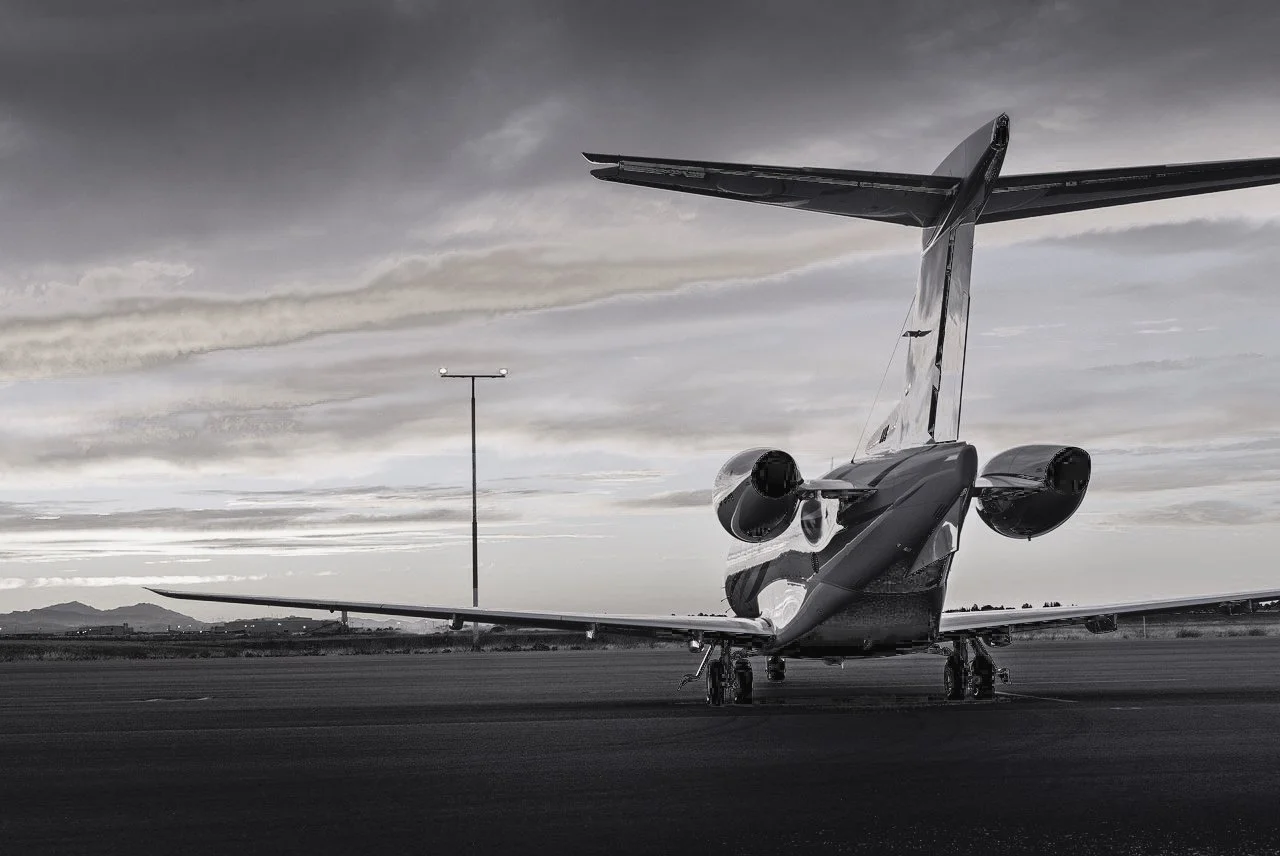
Moving up the chain, light jets cap out a regulatory threshold. Just under 19,000 lbs (except the lighter CJ3), they are the largest aircraft manufactured under Part 23 regulations. They maximize utility and simplicity for a jet, and are your last chance of flying single-pilot, although that may not be a viable insurance option. The added system complexity starts to pay off over turboprops with performance gains at this level.
| Price | Budget | |
| Nextant 400XTi | $5.5M | $1.5M |
| Textron Citation CJ3 Gen3 | $9.5M | $1.5M |
| Embraer Phenom 300E | $11M | $1.5M |
| Textron Citation CJ4 Gen3 | $12M | $1.5M |
| Pilatus PC-24 | $13.5M | $1.5M |
The Nextant is a remanufactured BeechJet/ Hawker 400. Notice their modus operandi, remake the most popular, retired aircraft models that are still flying (parts availability).
Midsize
Midsize aircraft are the first foray into CFR Part 25 certification standards. These regulations require aircraft to have two pilots and to include additional complexity, such as dual-wheel landing gear, system redundancy, and other safety features. It doesn't mean smaller aircraft lack these features; it just means the FAA doesn't require manufacturers to include them.
| Price | Budget | |
| Textron Citation Ascend | $17M | $1.5M |
| Textron Citation Latitude | $19.5M | $1.6M |
| Embraer Praetor 500 | $18M | $1.7M |
It is a small market because you've added more regulatory compliance than performance. The light jets can match most performance specs at the Ascend end, and you're pushing super-mid specs without the seats at the Praetor 500 end. Latitudes operating in the popular middle ground.
Super-Mid
These will fly to Europe and Hawaii from the coasts. Super-Mids all come in around 40,000 lbs. It's a sweet spot of seats and range, yet still light and small enough to have very few size and weight operational restrictions. Five manufacturers.
| Price | Budget | |
| Embraer Praetor 600 | $22M | $1.8M |
| Gulfstream G280/G300 | $29M | $1.8M |
| Bombardier Challenger 3500 | $28M | $1.8M |
| Textron Citation Longitude | $29M | $1.8M |
| Dassault Falcon 2000LXS | $36M | $1.9M |
Large Cabin
More seats, more headroom, go a long way, cabin attendant, kitchen equipped. Down to four manufacturers. Again, the Nextant is a remade, this one based on a Challenger 604.
| Price | Budget | |
| Nextant 604XT | $8.5M | $1.7M |
| Bombardier Challenger 650 | $34M | $2.0M |
| Gulfstream G400 | $38M | $2.2M |
| Dassault Falcon 900LX | $48M | $2.3M |
| Dassault Falcon 6X | $52M | $2.3M |
| Gulfstream G500 | $50M | $2.4M |

Photo courtesy of Colin Waldorf.
Ultra-Long Range
Travel the world, sleep on a bed in-flight. How far do you want to go? Only three companies remain.
| Price | Budget | |
| Bombardier Global 5500 | $55M | $3.0M |
| Gulfstream G600 | $58M | $3.0M |
| Bombardier Global 6500 | $62M | $3.0M |
| Dassault Falcon 8X | $65M | $3.1M |
| Bombardier Global 7500 | $78M | $3.1M |
| Dassault Falcon 10X (*2027) | $78M | $3.0M |
| Gulfstream G700 | $80M | $3.1M |
| Bombardier Global 8000 | $82M | $3.2M |
| Gulfstream G800 | $82M | $3.1M |
The reason for the bump in the operating budget for Ultra-Long Range over Large Cabin is due to calculator assumptions. In this case, adding a third pilot explains most of the cost increase (assuming more long-haul operations). You can adjust to your operation here.
Bizliner
Take a shower, bring your entourage, park at a big airport, and buy a helicopter tender to match. Wait, you're not thinking big enough. Buy land, build your own 10,000 ft runway, and leave the hassles of crowded airports behind. Two options remain.
| Price | Budget | |
| Boeing BBJ Select | $75M | $2.7M |
| Airbus ACJ TwoTwenty | $85M | $4.2M |
| Airbus ACJneo | $105M | $4.5M |
| Boeing BBJ 737 MAX | $110M | $4.3M |
| Airbus ACJ330neo | $220M | $6.4M |
| Boeing BBJ 787 | $260M | $8.2M |
| Airbus ACJ350 | $320M | $6.8M |
| Boeing BBJ 777X | $425M | $8.7M |
On the Horizon
Clean-sheet aircraft designs are rare. The regulations and testing required are very high barriers to entry. Three up-and-comers have potential.
SyberJet SJ-36 - Light jet with midsize specs.
Otto Aviation Phantom 3500 - Light jet with super-midsize specs.
Boom Overture - supersonic.
Performance Specs
Here is a CVS file with the performance specs of all the in-production aircraft. A few notes:
Numbers are 2025 estimates and have not been verified by manufacturers.
Reduce the maximum speed by a few ticks for a typical cruising speed.
The NBAA range is a more realistic figure than the maximum range. It includes regulatory considerations such as required fuel for alternate airports. To achieve range figures, reduce the maximum speed by yet a few more ticks, and you might need to kick off a couple of passengers on smaller aircraft.
The runway required is for a maximum gross weight takeoff, which is an important figure for your home base airport.
Aircraft weight provides a good indication of the aircraft's size. As the aircraft gets heavier, its weight becomes more limiting. Even if you have the necessary runway length, the runway or ramp may not be able to support the weight.
Aircraft dimensions, like weight, can be operationally limiting once you reach a certain size—wingspan for taxi, and tail height for hangar space.
The full fuel payload is useful for estimating how many people you can transport while maximizing range.
Unpressurized turbine aircraft are excluded due to speed and altitude limitations.
Opinion
Want a shorter list? The above is unbiased information; here is my opinion, no sponsors.
Epic E1000GX
Pilatus PC-12 Pro
Textron CJ3 Gen 3
Pilatus PC-24
Textron Lattitude
Gulfstream G300
Gulfstream G400
Gulfstream G700
The Epic is a performer. The PC-12 is the most utility/$/Gal/seat/nm/ft of runway and makes it hard to justify any light jet unless you really want a jet. CJ3 when it starts to pay off. PC-24 maxes out Part 23 building specifications and Category B approaches (max utility vs min regulation). Pilatus on both because that cargo door is super useful. Latitude hits functional performance specs for domestic operations. Super-mids, large cabins, and long range are hard to go wrong with any. All are established manufacturers; Gulfstream edges out due to home bias. G300 if weight is limiting, G400 does it all. Longer-range aircraft are mission-specific, the G700 if you want the comforts of a big.
Shorter list?
PC-12
PC-24
G400
Aviate
Access the aircraft operating cost calculator here.
Access the performance specs of all aircraft here (CVS file).