Used Aircraft
Summary
12/15/2025. Read time: 10 min.
Aviation is a very niche market, with only a few hundred units produced for the most common aircraft models. For any used aircraft, you must consider the availability of parts, maintenance support, and insurability. Only buy popular used aircraft.
The hours, cycles, maintenance history, damage history, logbook history, and age all heavily influence the cost. Knowing the specifics of an aircraft model is very important.
We will cover the available options over the last 20 years, market trends, and provide a summary of the manufacturers and their aircraft lieniage.
A New Aircraft rundown is available here.
For an estimate of purchase price and operating cost, here is a calculator.
Details
Turboprop Market
Here are turboprop deliveries by manufacturer over the last 20 years (source: GAMA).
Some takeaways. 2008 was rough. Twins are trending down in favor of single-engine turboprops. There will always be a market for some King Airs if you need a twin. Pilatus and TBM are pumping out consistent numbers, and Piper is expanding. Epic is a new, certified, up-and-coming brand gaining popularity. Piaggio limps along post-bankruptcy.
Jet Market
Now jet deliveries by manufacture:
Some takeaways: 2008 was rough. Taking out the Vision Jet, deliveries are down over the decade. Bombardier, Textron, Gulfstream, and Embraer are all holding market share. Dassault and Honda slip. Pilatus establishes a presence. Cirrus is killing it on the entry-level end. Bizliners remain for the few.
Jet Market by Class
A “jet” is a big term. Here is another look at the data, this time by jet class. Note, Large Cabin and Ultra Long Range aircraft are grouped together due to the way manufacturers report their data.
What follows is a summary of the manufacturers. Where they came from, how their business is doing, the lineage of aircraft, and what they produced in the last 20 years. Why 20 years? A lot has changed in avionics over the last 20 years, and some maintenance shops cap their services at 20-year-old aircraft. It’s a good filter when buying used.
Turboprop Manufacturers
Piper
M500, M600, M700 Fury
One of the three surviving golden era manufacturers in the USA (Piper, Cessna, Beechcraft). Initially, Taylor Craft, later acquired and renamed Piper. The most successful aircraft was a WWII reconnaissance aircraft, the Piper Cub. Piper has been out of the family for a while, and as of 2011, it is a state-owned company, owned by the Government of Brunei (borders Malaysia). Aircraft are still produced in Florida.
Regarding business aviation, they have one type, the PA-46. This type goes by many names and has been around since 1983. Piston versions include: Malibu, Malibu Mirage, and the current Matrix. The entry-level turbine versions are our focus: Malibu Meridian (1997+). Meridian was renamed M-Class: M500 (renamed Meridian), M600 (2016-2024), and M700 Fury (2024+). More power and better avionics across the models. You may come across a Jetprop, which is an M350 (piston) converted to a turboprop.
Daher
TBM 700, 850, 900, 910, 930, 940, 960, 980
History doesn’t repeat, but it rhymes. Morane-Saulnier was the original French aircraft manufacturer, bought by SOCATA (a French acronym) and made single-engine piston aircraft (Tampico TB-9 and Tobago TB-10), which evolved into the TBM series in the 90s. Interesting fact: the “M” in TBM is the development incorporating Mooney aircraft design. Post 2008 fallout, SOCATA was acquired by the French Daher Aerospace and dropped the SOCATA name. Daher also bought Quest Aircraft and produces Kodiaks (unpressurized turboprops).
The TBMs are produced in France. Models progress in power, performance, and avionics. TBM 700 (1990-2005), TBM 850 (2006-2013), TBM 900 (2014-2016), TBM 910 (2017-2025), TBM 930 (2016-2021), TBM 960 (2022+), TBM 980 (2026+). The newly released TBM 980 upgrades a few options of the TBM 960. TBMs boast the best-in-class speed, which comes from a smaller cabin (sports car).
Epic
E1000, E1000GX, E1000AX
Our first relatively new market entry. Epic Air has the scars of bad timing. The Oregon-based company started out producing an experimental turboprop kit, the LT, available starting in 2006. While pursuing full certification, they went through bankruptcy in the aftermath of 2008. Several acquisitions later, they are still kicking. It is an interesting case study: start with a clean sheet experiment and move to a certified aircraft.
The E1000 is the first certified version of the LT released in 2019. The newer E1000GX and E1000AX models, you guessed it, are incremental improvements. Production and adoption have been increasing every year since they came out. The performance advantages of a clean-sheet design make it a market contender, and as of 2024, Epic is gaining volume year over year.
Pilatus
PC-12
Back across the pond, Pilatus is a Swiss household name. Starting with Swiss Air Force contacts in the WWII era, Pilatus moved into the civilian market with a STOL PC-6 Porter - a non-pressurized turboprop built 1962-2022. No bankruptcy drama here, the Swiss have been turning them out consistently for over 30 years.
In 1994, the PC-12 was released. The first with a cargo door large enough to fit a loaded pallet, the PC-12 was intended to be a cargo plane and replace the Cessna Caravan. Complications with loading a low-wing aircraft with forklifts caused Pilatus to pivot into executive travel. Several reiterations along the way: PC-12/41, PC-12/45, PC-12/47 PC-12/47E. The 47E includes PC-12NG, PC-12NGX, and PC-12 Pro (although sometimes the Pro is called the 47/G because of the switch from Honeywell to Garmin avionics).
PC-12/41 are the early serial numbers, most converted to /45s. The 41/45/47 indicates the max gross weight in KG (ie, 4500kg). The /45s ran from 1996-2005 and were further subdivided into Series 1-10, most are now updated to Series 10. The /47s were a short run from 2005-2008. Further weight increase. Today /47s avionics conversions are popular. 47/Es are integrated avionics platforms and comprise PC-12NGs (2008-2019), PC-12NGXs (2019-2025), and PC-12 Pros (2025+).
Textron (Beechcraft)
Denali, KingAir 90, KingAir 200, 250, 260, KingAir 350, 360.
Beechcraft emerged from the Curtiss-Wright Corporation in the 30s, and, along with Cennsa, helped establish Wichita as the air capital of the world (full-circle moment coming). Starting with the pistons, Model 17 Staggerwing, Bonanza, Baron, and QueenAir, then moving into the KingAir turboprop series. In 1980, Raytheon bought Beechcraft and was later acquired by Textron following a restructuring in 2014.
Textron has its own long history. Starting as a textile company, Textron transitioned into a military contractor in WWII (see the pattern). In the 60s, Textron dabbled in aviation by acquiring Bell Helicopter, and in 1992 expanded by buying Cessna Aircraft - keeping the Cessna name. Once Textron acquired Beechcraft, Wichita hatches were buried, and product lines were hacked into complementary roles. Beech has the props, Cessna has the jets.
The Beechcraft KingAir 90 started the turboprop legacy in 1964. Restricting the lookback to the last 20 years, the remaining reiterations are the C90GT (2005-2007), C90GTi (2007-2015), and C90GTx (2015-2021), when production ended, kind of. Nextant makes a C90XT, which is a remanufactured, zero-time KingAir. Moving on, the KingAir 200 series has also been around for decades. The B200GT/CGT with Proline Avionics (2003-2011), 250 (2011-2020) followed by the 260 (2020+). Similar story for the 350, the B300 follows the same Proline upgrade (2003-2020), and 360 designation (2020+). An extended-range 350ER/360ER version has been available since 2005.
Lastly, the Beechcraft Denali is slated for deliveries starting in 2026. It’s a PC-12 single-engine clone with a GE engine vs. a Pratt & Wittney engine.
Piaggio
P.180 Avanti II, P.180 Avanti EVO
The oldest company on the list, Piaggio, has been in aviation since 1915, mainly producing fighters/trainers until its first business aircraft entry in 1986. Several bankruptcies have stifled Piaggio. Most recently, a Turkish defense company, Bayker, acquired the Italian legacy in 2024 - most likely more for the special mission and UAV products than for the business aviation market.
Affectionately known as the Catfish, the Piaggio P.180 is a good case study on aerodynamics. Pusher and canard-designed turboprop with great economics at jet performance. The Avanti II ran from 2005-2014, followed by the Avanti EVO (2014+).
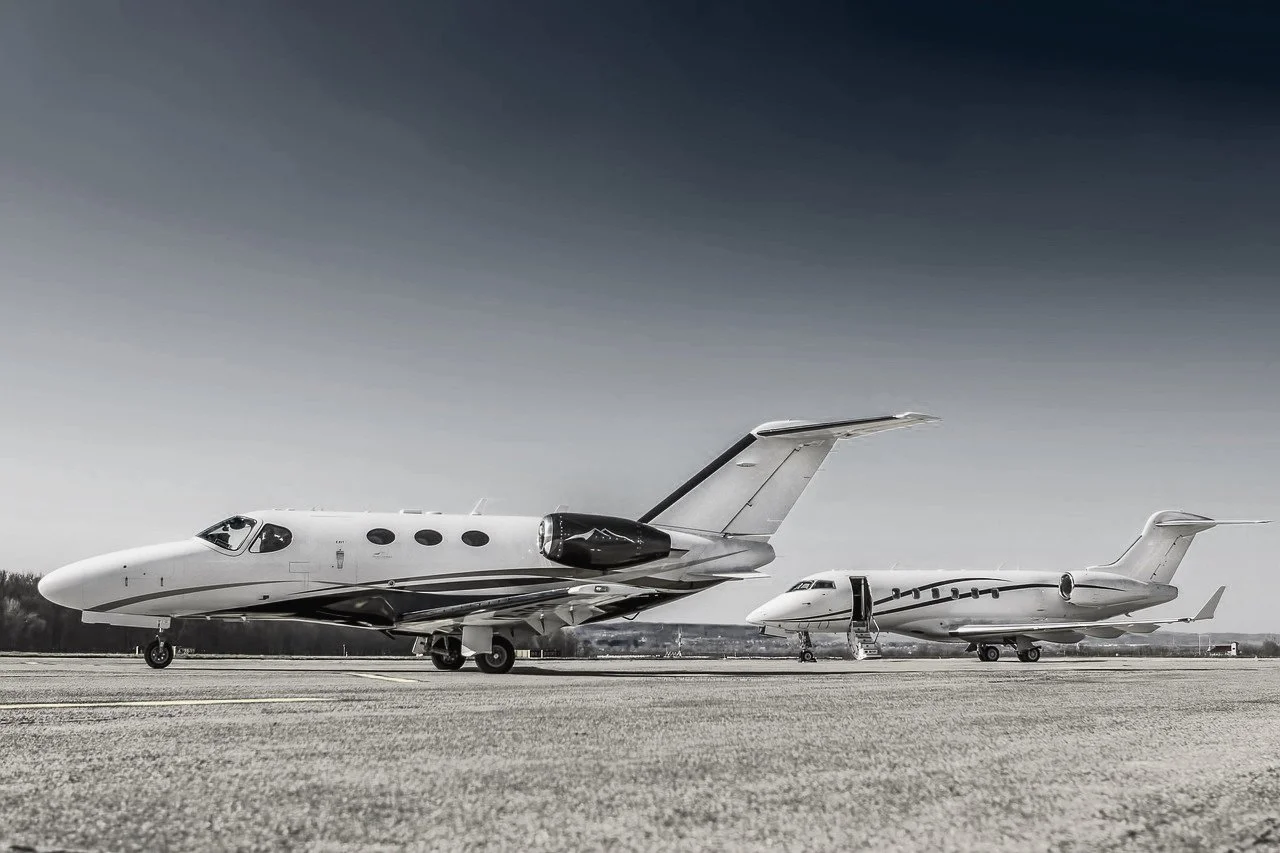
Jet Manufactures
Cirrus
SF50 Vision Jet
Cirrus, a recent startup by aviation standards, is the playbook Epic borrowed from. Start experimental, move to certified aircraft. Cirrus delivers over a third of all new piston aircraft today. Minnesota-made Cirrus raised development and expansion capital through majority ownership changes. First to a Persian investment company in 2001, followed by a Chinese state-owned company in 2011. In 2024, Cirrus held a minority share IPO on the Hong Kong Stock Exchange.
The next logical step for the popular SR-22 operators was a jet, the SF50. Called a personal jet, and weighing 6,000 lbs, it is the smallest entry into the jet world in 2016. The Vision Jet has been exceptionally well-received, with around 100 deliveries per year. It checks the jet box, but is more comparable to the turboprops.
ONE / Eclipse
Eclipse 500, 550
Eclipse was going to change the charter industry. Hundreds of 500s floating around the US, point-to-point service with economics targeting a new demographic. Deliveries began in 2006. 2008 and a bankruptcy later, they launched the 550 in 2011. Meged with Kestrel, a Cirrus spinoff (small world), as ONE Aviation in 2015. Another liquidation in 2021. The renamed Eclipse Aerospace has had two deliveries since.
Honda
Honda Jet HA-420 Elite, APMG, Elite II
A subsidiary of Honda, they produced a clean-sheet jet design out of their North Carolina facilities. Rather than selling ownership, the aerospace division accounts for a rounding error of the parent company. The interest began in the 80s and came to fruition starting in the early 2000s.
Certification was achieved in 2015 with the HA-420. 2018 rolled out the Elite version, followed by an APMG upgrade on prior models, and currently the Elite II (2022+) Standard playbook: bigger, faster, more range and payload.
Pilatus
PC-24
See history above. The PC-24 is the next step up for PC-12 owners. Since deliveries began in 2018, Pilatus has produced consistent numbers. Starting with serial number 31, the gross weight increased slightly.
Textron (Beechcraft) and Raytheon (Hawker)
Premier, Hawker 400, 750, 800, 850, 900, 4000
Okay, a lot of layers and defense spending to get to the present day: Sopwith Aviation made WWI aeroplanes for the Brits. Sopwith sold to Hawker, then Hawker bought Siddley to form Hawker Siddeley. They made Hawker Hurricanes in WWII. In the 70s, a national merger formed British Aerospace from Hawker and a few other companies. British Aerospace built the Hawker Siddeley HS.125-800 and -1000s. The HS.125 being a redesigned DH.125 (de Havilland). Stick with me, this is actually going somewhere.
Beech acquired the rights to produce a Mitsubishi MU-300 Diamond in 1985 and renamed it the Beechjet 400. Raytheon (a US defense conglomerate) bought Beech in 1980, and later bought the British Aerospace aircraft production line in 1993. The new and improved Beechjet 400 became the Hawker 400. The HS.125 became the Hawker 800 and 1000. Ratheon added the Hawker 4000 and the Beechcraft Premier to the fleet. In 2006, Raytheon sold off its aircraft production, and the Hawker Beechcraft company was formed to continue production. One bankruptcy later, Textron acquired it all in 2014 and cut production of all Hawker/ Raytheon/Beechcraft jets.
If you got lost, now you can tune back in. Over the last twenty years, all that history boils down to the following models: Premier Jet, Hawker 400, Hawker 800 series, and Hawker 4000. Premier 1/A, made to compete with Cessna, ran 2006-2012. The Hawker 400XP (2003-2011) has an upgrade option, 400XPR, which improves performance. Nextant Aerospace remanufactures and zero-times 400s as Nextant 400XT. The Hawker 800 series includes the 750, which replaced fuel with baggage (2008-2001), and performance upgrades for 800XP (Rayehon-2006), 850XP (2006-2010), and 900XP (2007-2012). Finally, the Hawker 4000 was produced from 2008 to 2013.
Textron (Cessna)
Citation Mustang, CJ1, M2, CJ2, CJ3, CJ4, Bravo, Encore, XLS, Sovereign, Latitude, Longitude, X
Cessna’s history is clean in comparison. Wichita company since 1927, purchased by General Dynamics in 1985, and by Textron in 1992. One of the big three US manufacturers over the last 100 years. The Citations began rolling out in the 70s. When Textron bought Beechcraft, both production lines were synergized. Beech kept the props, Cessna kept some of the jets. Where they competed in the turboprop/light jet market, they simplified their offerings.
Cessna has produced 13 models, not counting the +’s, of Citations over the last 20 years; however, the listed jets hang on a scaffolding of 6 different aircraft types.
CE-510: Mustang (2006-2017).
CE-525: CJ1 (1996-2005), CJ1+ (2005-2011), M2 i.e. Mustang 2 i.e. a renamed CJ1 (2013-2021), M2+ (2022+), CJ2 (2000-2006), CJ2+ (2006-2014), CJ3 (2004-2014), CJ3+ (2014+), CJ4 (2010+).
CE-550: Bravo (1997-2006)
CE-560: Encore - an improved Ultra (2000-2006), Encore+ (2007-2011), XLS - an improved Excel (2004-2009), XLS+ (2008-2025), Ascend (2025+), Sovereign (2004-2013), Sovereign+ (2013-2021), Latitude - built on a Sovereign wing (2015+)
CE-700: Longitude (2019+)
CE-750: X (1996-2012), X+ (2014-2020)
Dassault
Falcon 50, 900, 2000, 6X, 7X, 8X, 10X
Dassault is yet another defense company with roots in WWII that has since produced a host of military and civilian aircraft. The French company is partially owned by Airbus, albeit a shrinking percentage, and has the only tri-jet options on the market. Solid financials, I think the takeaway from this exercise is to have deep pockets or government contacts if you intend to run an aircraft manufacturing business.
The Falcon 50 started its production in the 70s. The 50EX tri-jet was the last version (1996-2008). The larger and longstanding 900 has several iterations back into the 80s. For our purposes, 900DX (2005-2010), 900EX EASy (2003-2011), 900LX (2010-2014+). The 2000 is a smaller, twin-engine version of the 900. 2000EX EASy (2004-2009), 2000LX (2009-2013), 2000LXS (2013+), and a shortfield version, the 2000S (2013-2021). The 7X and 8X are scaled-up tri-jet 900s, 2007-2023 and 2016+ respectivly. The 6X was developed from a 5X, the 5X never made it to market. Slightly larger than the 7X/8X, it saves complexity due to two engines (2023+). Finally, the 10X is still in development, standard bigger, faster, further, expected in 2029.
Embraer
Phenom 100, 300, Legacy 450, Legacy 500, Praetor 500, 600, Legacy 600, Lineage 1000
While most companies start small and work up to business jets, Embraer did the opposite. In the 60s, the Brazilian company began to support the Brazilian military. Later, they expanded into airliners and, lastly, into business aviation jets. As a state-run entity, it approached financial difficulties, was sold to private investors, and had an IPO in 2000. Another opposite: when most hit hard times during the Great Recession, Embraer increased deliveries. Now it is the third-largest aircraft manufacturer, behind Boeing and Airbus.
The Phenom 100 (2008+) has seen several ratcheting improvements: 100E (2014), 100EV (2017), 100EX (2023). Originally a stretched Phenom 100, the Phenom 300 (2009+) became a completely redesigned aircraft, upgraded in 2018 to the 300E. The Legacy 500 was delivered before the Legacy 450, delivered from 2014-2020 and 2015-2019 respectively. Both evolved into the Praetor series. Praetor 500 (2019+) from the Legacy 450, and Praetor 600 (2019+) from the Legacy 500. The remaining two, Legacy 600 and Lineage 1000, are airliners, ERJ-135/ERJ190, adapted for business aviation. Legacy 600 ran from 2002-2020, Lineage 2009-2017.
Bombardier and Lear
Lear 40, 45, 60, 70, 75, Challenger 300, 350, 3500, 605, 650, Global XRS 5000, 5500, 6000, 6500, 7500, 8000
Bombardier’s legacy threads together submarines, trains, snowmobiles, airplanes, governments, and defense contractors in its own full-circle way. Two more takeaways: governments have a bad track record of making aircraft, and everyone has had a turn with defense companies. Roots go back to WWI, when the de Havilland Aircraft Company (Brits) founded de Havilland Canada. WWI brought the company under the Canadian Government, which formed a consortium producing aircraft (including the iconic Beaver), ships, subs, snowmobiles, and trains as Canadair. Shortly after the war, the American Electric Boat Company diversified its submarine production by buying Canadair, and the merger formed General Dynamics.
To the South, in Wichita, another major player, Learjet, was getting off the ground in the 60s. Early success made the business jet name synonymous with a Learjet. Lear designed the LearStar 600, which Canadair put into production and branded the Challenger 600. This happened the same year General Dynamics sold Canadair back to the Canadian Government, who then sold de Havilland to Boeing. In 1986, Canadair privatized and was renamed Bombardier, and a few years later, bought Learjet and de Havilland. Which is how we get to the recent history of Bombardier producing Learjets, Challengers, Globals, and airliners (CRJs, de Havilland Dash-8s, CS100- renamed Airbus 220).
Bombardier began divesting to focus on business aviation in 2018, selling the CS100 to Airbus, de Havilland line to Viking (later to become de Havilland Canada), the training division to CAE, and CRJ line to Mitsubishi. The Lear line was also shut down in 2022. Through some combination of divesting and COVID, Bombardier was half the size of its 2018 peak 5 years later in both revenue and employees.
The Lear 60 was produced from 1993-2013, the upgraded 60XR beginning in 2007. The 60 was based on the 55, both of which were based on the Lear 23 type. The Lear 45 (1998-2013) was a new popular design, with the Lear 40 a smaller follow-on. Both were upgraded to XRs in 2004. 2013 marked the transition to Lear 70/75 (improved 40/45s) until the last delivery in 2022. The Challenger 300 (2003+) encompasses the 300 (2003), 350 (2014), and 3500 (2020+). Challenger 600s have been around in some form since the 70s, and are now the last remnant of Lear. We are almost 20 years removed from the introduction of the 605 model in 2006, followed by the current 650 (2015+). Globals started with Global Express, upgraded to XRS (2005), upgraded to 6000 (2011), and upgraded to 6500 (2019+). The Global 5000 (2002-2019) was a smaller XRS/6000, now the 5500 (2019+). The Global 7500 (2019+) is a clean-sheet aircraft paired with its sister, the 8000 (2025+).
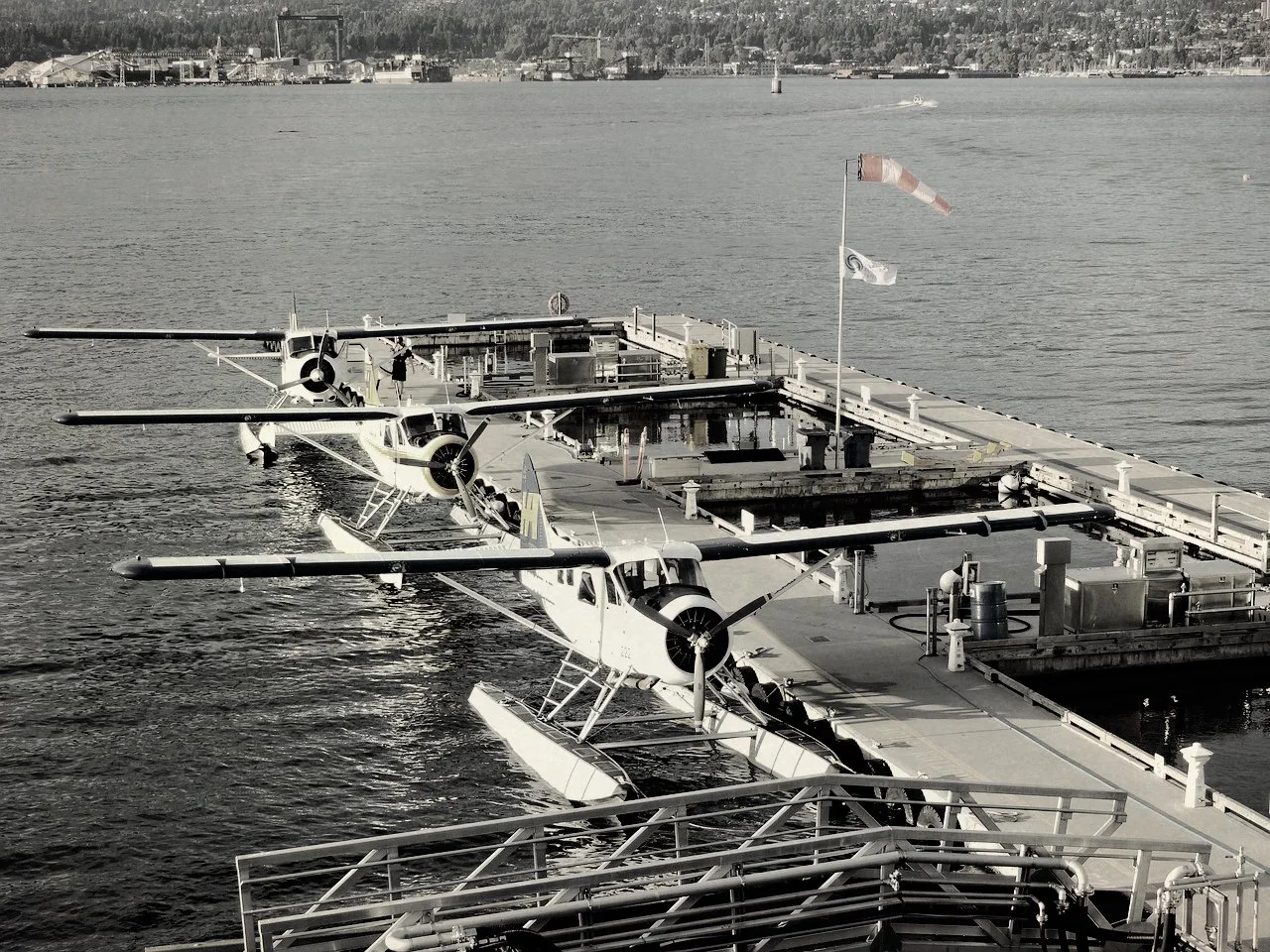
Gulfstream
G150, G200, G280, G300, G350, G400, G450, G500, G550, G650, newer: G300, G400, G500, G600, G700, G800
WWII launched another successful aviation company, Grumman Aviation. Their Hellcats and Avengers gave way to Grumman Gulfstreams. Perhaps distracted by the Apollo program, Grumman sold Gulfstream to American Jet Industries in 1973, a used-aircraft and parts company that rebranded itself as Gulfstream. The owner, Allen Paulson, led the company to produce the first Trans-Atlantic business jets, sold to Chrysler in 1985, and bought it back in 1990.
General Dynamics wanted to get back in the game and purchased Gulfstream in 1999, followed by the acquisition of the Israeli company Galaxy Aerospace in 2001. At that point, all existing aircraft were rebranded. Let’s take this one type at a time.
Astra SPX became a G100, later repalced by the large G150 (2006-2017)
Galaxy became a G200 (1999-2011), improved to a G280 (2011-2025+). The G280 was briefly called a G250, but it’s the same bird. In 2026, the G280 will transition to a G300 (still a G280 type, and not to be confused with the GIV G300 below).
GIV was renamed G300, and GIV-SP was renamed G400. The G400 was upgraded to G450 (2004-2018) and a shorter range G350.
GV improved to GV-SP, renamed it the G550 (2003-2021), and was paired with a shorter-range G500.
GVI type ends the rebranding lineage with a clean sheet G650 (2012-2025), that had an extended-range option: the G650ER (2014-2025).
GVII’s are current production aircraft. The G500 (2018+), G600 (2019+), and coming soon G400 (2026+)
GVIII’s are based on the G650. The G700 (2024+) is the largest flagship aircraft, and the G800 (2025+) is an improved G650.
Airbus
Founded to compete with Boeing, European countries banded together to form Airbus in 1970. The French and German governments still own 10% of shares each. The Airbus Corporate Jets models involve taking the latest in-production airliner and upgrading the interior.
Boeing
The history is much richer on the Boeing side than on the Airbus side. Starting with seaplanes in 1917, through Stearmans, and a McDonald Douglas acquisition. On the non-aviation side, Boeing dabbles in rockets, missiles, and satellites. For those who want the advantages of a wider-body aircraft, the BBJ (737) is an option. Like Airbus, the latest airline product can be configured for executive travel.
Aviate
Access the aircraft operating cost calculator here.
Access the performance specs of all aircraft here (CSV file).