Acquisition
Summary
1/2/2026. Read time: 8 min.
This guide sheds light on the aircraft acquisition process and sets expectations for the steps involved: sourcing, brokers, offers, contracts, inspections, escrow, titles, registrations, tail number changes, and registration blocking.
Buying an aircraft is a very niche market that is unfamiliar to most. Unless you have exceptional knowledge or experience with a specific type, consider utilizing a broker.

Details
After considering the field of live options in the aircraft market, you've picked out the new or used type that fits your budget and mission. See:
New Aircraft for a summary of all 53 in production business aviation turboprops and jets.
Used Aircraft for a brief history of aircraft and manufacturers in the last 20 years.
Calculator to estimate an annual operating budget.
Now you're ready to move from daydreaming to buying. This guide is an orientation to the acquisition process.
To broker or not to broker
Unless you are intimately familiar with a specific aircraft type, yes, you should use a good broker. The turboprop and jet market is extremely niche and low volume. We are talking about 1000 deliveries per year, total, worldwide.
Each serial number is a unique machine. Price is highly dependent on age, hours, maintenance status, damage history, warranty status, and ongoing parts support. It is easy to overlook or be uninformed about details that are costly down the road.
A knowledgeable broker adds value by protecting against downside on the buy. They also usually have more market insight into comps, as sales data is not readily available. Having the data and being able to apply it to a specific serial number can ensure you're getting an appropriate price.
Additionally, while Controller is the leading marketplace for listing aircraft, many deals take place off-market through personal networks of owners, pilots, and connected brokers. Even if buying new, experienced brokers know what negotiation levers are available from the manufacturer.
Caution: notice the adjectives—good, knowledgeable, connected, experienced broker. The aircraft sales industry has a reputation for not being fiduciary to its clients. Brokering aircraft is an unlicensed profession that only requires a phone and an internet connection to get started. In addition to expertise, honesty and trust are imperative - trust your gut. The only accreditation out there is the International Aircraft Dealers Association (IADA), a consortium of 100 or so brokers doing 40% of used turbine sales volume.
The Process
Buying an aircraft is nowhere near as complicated as real estate. The minimum required to get a deal done is a signed Bill of Sale, an Aircraft Registration Application, and a check. Because of the dollar amounts, additional steps are included for protection:
LOI - Pre-Buy - APA - Escrow - Closing: Bill of Sale, Aircraft Registration Application, Funding
Narrow the field - used
Let's say it's a good market to buy, and your broker has found several on and off-market options. They should get a good handle on the aircraft's equipment options and maintenance via a maintenance logbook review and a maintenance status sheet.
Once you find what you like, the next step is to submit a Letter of Intent (LOI) to purchase, outlining the basic terms, the process forward, and a deposit to escrow (title company) to show you are serious. Once both parties agree to the LOI, you have dibs on the aircraft.
Now several things happen at once. The Aircraft Purchase Agreement (APA) is drafted and signed based on the negotiated LOI terms. The buyer arranges insurance, secures financing, and establishes the aircraft's ownership structure. The pre-buy maintenance inspection is scheduled and started; if desired, now is a good time to change the tail number (more on that later).
Ownership structure is largely a tax consideration. The options are direct ownership - personally or through a business, or you set up a separate LLC and dry lease it to a person or business. There are other options (wet lease and joint ownership), but they are unnecessary. Dry leasing will accomplish the same goals more cleanly than these options. A full tax write-up is in the works that will discuss this and the Flight Department Company trip; stay tuned.
Pre-buy
If you tell an A&P mechanic you want a pre-buy inspection, you can expect follow-up questions. A pre-buy is not a defined inspection; it is what you want it to be. This is where familiarity with an aircraft type and knowing what to look for adds value. The buyer pays for the inspection. If you discover discrepancies, you can walk away or renegotiate the APA terms - either way, you're paying for the pre-buy.
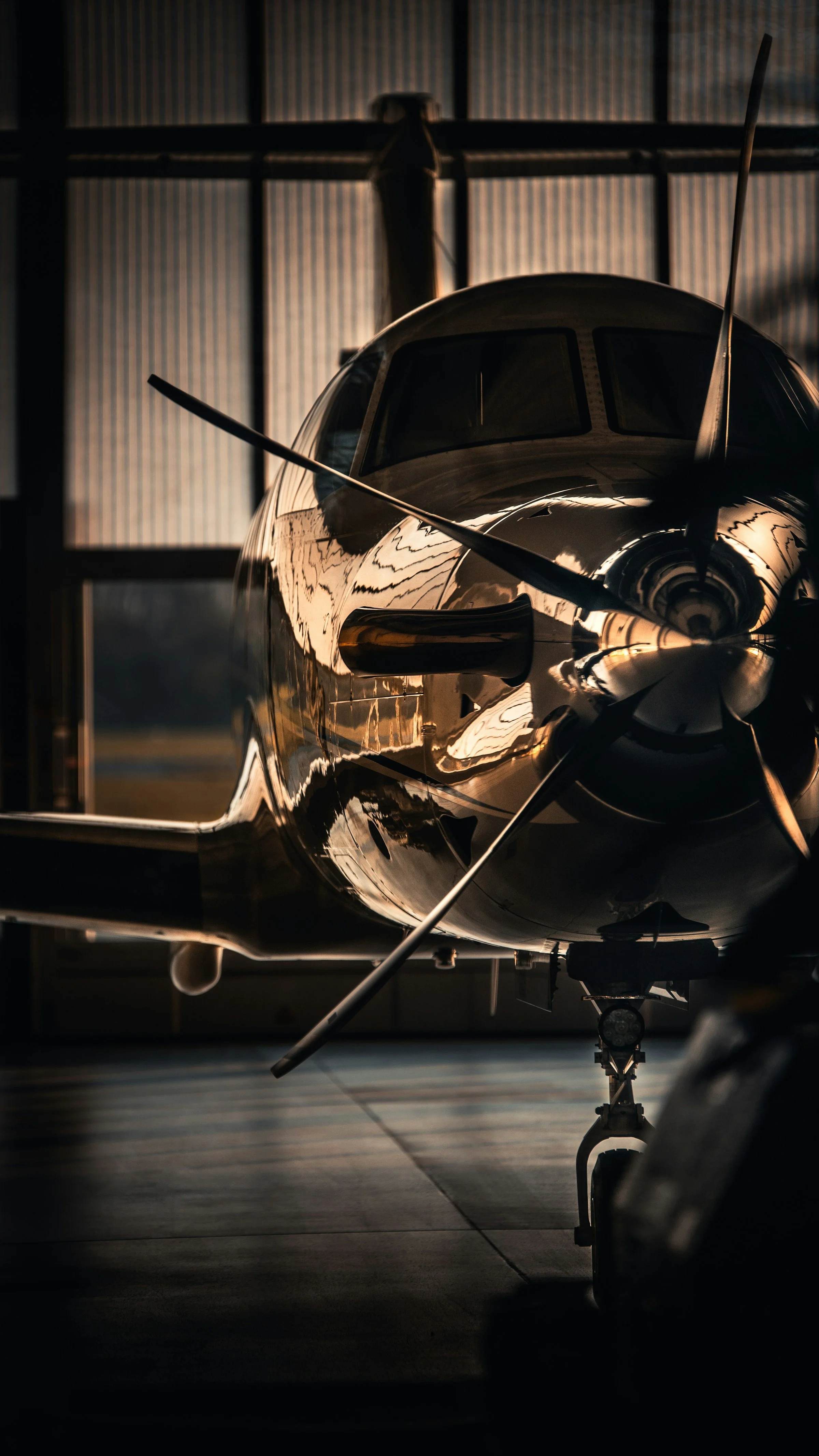
Here is a thorough pre-buy:
Logbook Inspection - damage history, times/cycles, engine hot section, and engine and propeller overhaul status.
Annual Inspection
Engine Borescope
Corrosion: wing bolts, belly panels.
Hail damage: control surfaces and tail
Lightning strikes: propeller tips and trailing edges
Title/ lein search: FAA and international registry
Big ticket items (PC-12 specific example):
Wing Attachment inspection (10-yr inspection)
Pitch trim actuator (7-yr life-limited item)
Starter/Generator overhaul (1000 hrs)
Number of tire changes (5 times, and the wheel needs an overhaul).
Window crack inspection (10-yr inspection)
Anti-Ice wing and prop boot condition
Cracked brake pads and rotors
Angle of Attack heating elements
Exhaust stack cracks or chaffing
Findings can go into one of three buckets:
Airworthiness discrepancies: seller fixes
Non-airworthiness discrepancies: negotiable (that 20-year-old inoperative CD player is not the hill to die on)
Upcoming inspection: not yet due, but may conventionally be done while it's in the shop: buyer might do opportunistically.
Treat your maintenance shop well. Pre-buys are not ideal work for them. You show up with little notice, and want the maintenance done yesterday. At the same time, you are slow because multiple parties are negotiating and making decisions about findings, and various entities may be paying the final bill. Then, if the deal goes south, they are stuck with an unairworthy aircraft in their shop and have to hand the owner an unexpected maintenance bill.
New Aircraft
Premium prices come with premium handholding. Your manufacturer salesperson's job is to reduce friction as much as possible, walk you through options and the process, and keep you on schedule.
It is the same process as a used aircraft transaction. Substitute the pre-buy time commitment for specing the aircraft.
Closing
Don't close the deal until the maintenance is complete, the aircraft is airworthy, and insurance is in place. Other tasks to prep while the pre-buy is in process are establishing the aircraft ownership structure, sourcing a pilot, scheduling pilot training, securing financing, prepping FAA operational authorizations (LOAs), securing hangar space, securing ground/support equipment, and the previously mentioned title search and escrow.
Title companies, such as AEROTitle or Aerospace Reports (LINK), can handle the last two. Title searches check for liens and verify ownership. Title companies also act as third-party escrow services for transactions. They have the added benefit of being local to the FAA Registration Branch in Oklahoma City, which expedites processing.
Lastly, let's say post-closing you want to fly internationally. A freshly purchased aircraft will have a temporary registration, which is not acceptable for international operations because the FAA registration database is not yet up-to-date with the new owner's details. Your title company can assist with submitting a Declaration of International Operations to make the trip happen if you have not yet received a permanent registration. More details here.
Back to closing, the APA will specify when and where it will take place. Where is very important. Aviation-friendly states have flyaway exemptions, meaning no sales tax is due if you get out of that state (and sometimes stay out) after closing. Details vary by state. An aviation tax specialist shines here - see a full tax write-up for more.
After a final walkthrough, to execute the closing and finalize the transaction, you sign (usually electronically) any updates to the APA, the Bill of Sale (FAA Form 8050-2), and the Aircraft Registration Application (Form 8050-1). You confirm the release of funds with the title company. Once the funds are verified, you are the brand-new owner of a time machine. Take the keys, buy some fuel (to verify closing date and location), print the temporary aircraft registration, and take it for a spin.
As the new owner, you can now submit FAA LOAs (another write-up coming soon - for now: MEL and RVSM), setup your department operations (more coming - for now CPDLC and CBP), and outfit it with all the gear: life vests, life rafts, first-aid kit, defibrillator, charging cables, headsets, aircraft stock, cleaning supplies, briefing cards, etc.
Optional: Tail Number Change
An acquisition is when it makes the most sense to request a tail number change. A tail number change, i.e., an aircraft registration change, can be accomplished during pre-buy, but it takes planning. The first step is to check whether your desired N-Number is already taken. You can search here.
This database is not real-time and up-to-date. Even if it shows available here, it may be taken by the time you submit your request to reserve an N-Number.
You reserve an N-number here and pay $10 to hold it for a year. You can input multiple choices, and if you do, you will reserve the first available N-number on your list. Ideally, you will have this confirmation in hand before any paint is applied. Or you can roll the dice, assume you'll get your requested tail number, and press on in the meantime.
While in pre-buy, the shop can paint the new tail number on the aircraft and place a decal of the old tail number (if the deal goes south, prepare to pay to paint it back). Really, the changeover could happen before, during, or after closing. The aircraft owner (whoever it is at the time) needs to submit a letter to the FAA that identifies the aircraft (S/N and current registration), authorizes the change, along with another nominal $10 fee.
Once that is complete, the FAA will issue an Assignment of Special Registration Number (AC Form 8050-64), which comes in three copies. This document authorizes the change. Once in hand, you can proceed - but it is more involved than removing a decal; several changes need to occur:
Paint the new aircraft registration (or remove the decal)
Transponder - code for the new tail number
ICAO Flight plan codes updated (HEX code & registration)
Insurance policy updated
Update all documents referencing the old registration, such as FOMs/LOAs/CPDLC (if already in place at the time of change)
Once done, place copy number 1 of AC Form 8050-64 in the aircraft. Copy number two must be sent to the FAA Registration Branch within 5 days to communicate that the change is complete. And copy 3 goes to your FSDO (Flight Standards District Office) to update the aircraft's Airworthiness Certificate to the new registration within 10 days. Reach out to the registration branch if you haven't received an updated, permanent registration within 90 days.
Optional: Registration Blocking
As of 2025, aircraft owners can now request to hide their registration from public view via the CARES portal. This is in addition to blocking flight tracking. A full article on the process and different options is available here.
Aviate
Browse listings: Controller, AERO Trader, GlobalAir, AircraftForSale, Trade-a-Plane, Barnstormers
Consider reaching out to a broker.